Kari Putkonen, Head of SME Sales at Aspia, estimates that around a third of Finnish companies are growth companies, meaning they aim for more than ten per cent annual growth. Growth companies exist in every industry, from construction to gaming. But how, and where, should companies look for growth? According to Putkonen, the opportunities are often closer than we think.
Summary:
- Sweden’s market is twice Finland’s, and the whole Nordic region is four to five times larger.
- Growth companies can be found in every industry.
- An ETLA study (11/25) found that private-equity-owned companies grow employment far more than other ownership types, with foreign-owned companies second.
- A change of ownership is the single best predictor of company growth.
The media can easily give the impression that Finland has no growth companies. According to Aspia’s Sales Director
Kari Putkonen, that impression is wrong:
– Because GDP has been stagnant and Finland’s economy isn’t growing, people assume that companies aren’t growing either. The fact is that every industry has companies that are growing.
In spring 2026,
Kauppalehti’s Kasvava yritys event recognised Finland’s fastest-growing companies, including those from the construction industry, a sector that has been struggling.
According to Putkonen, this shows that growth is happening constantly at the level of individual companies, even when it doesn’t always show up in the statistics.
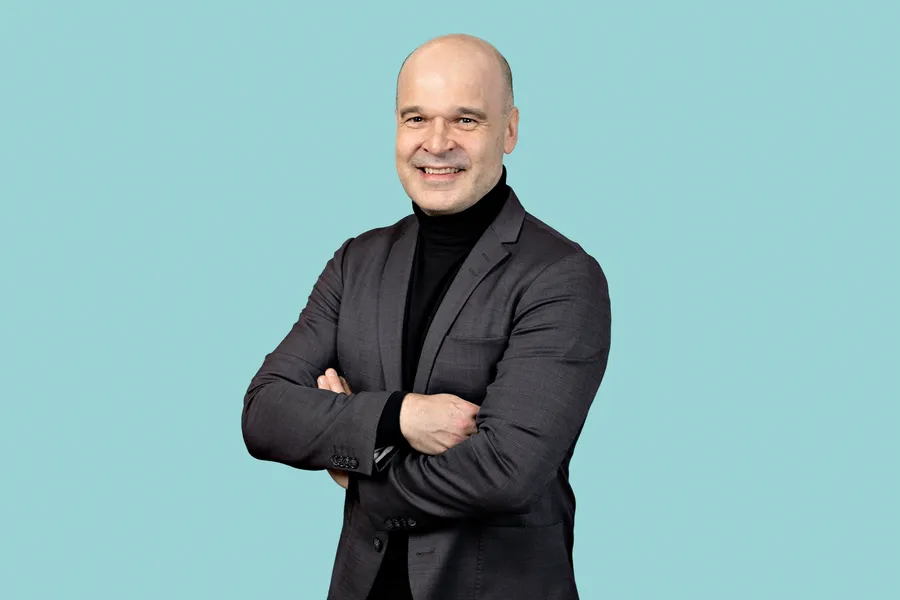 Kari Putkonen is Head of SME Sales at Aspia, a company specialising in finance, payroll and HR services. He has extensive experience with growth companies, having led one himself earlier in his career.
What do growth companies have in common?
According to Putkonen, growth companies make bold, deliberate decisions to grow.
– The single biggest factor is the owner’s decision to pursue growth. That usually requires a change of ownership or a new private equity investor. The change brings a growth structure with it, because the investment has to pay off.
Startups often pursue growth from the moment they’re founded. But whether a company is new or established, the requirements for growth are the same: governance, finances, personnel and financing structures all have to be built to withstand the growth ahead.
– It pays to act a little ahead of the curve, building capacity for a bigger operation than you need at first. Going international requires understanding the target country’s culture and legislation, and it often calls for new investments or subsidiaries, which cost money. If the budget falls short early on, a growth company quickly finds itself in trouble, Putkonen sums up.
Finland’s market runs out fast
According to Putkonen, the companies that do best have a clear core competence: they expand the same working concept to new customers instead of spreading their efforts in many directions.
The first step towards growth is usually taken at home, but that road often runs out fast. Every week, Aspia helps service and expert companies that have built a strong position in the domestic market.
– Pretty quickly, you run into the fact that Finland isn’t a very big market. At that point, it’s natural to look for growth in Sweden or Norway, if there’s demand for the same concept in a neighbouring countries, Putkonen says.
Sweden’s market is twice the size of Finland’s. Counting the whole Nordic region, the growth potential is as much as five times bigger, and Europe can offer close to a hundred times the opportunity.
– Of course, some companies should look straight at global markets. The gaming industry is a good example: products are sold directly through global distribution platforms, and there’s no actual domestic market. Competition is fierce, but even a small slice of the global market can add up to major success, Putkonen notes.
How to prepare for going international
- Choose your growth direction and define it: what’s your company’s core and whose problem does it solve?
- Keep your people on board: going international requires enough expertise, capability and resources.
- Keep your finances in order throughout the growth journey: forecasting cash flow six months to two years ahead makes you a credible partner for investors and lenders.
An ETLA study confirms: The right partner makes the difference
Growth rarely happens alone. According to Putkonen, the most common mistake is starting the growth journey without skilled financial and funding partners.
A study published in November 2025 by Etla, the Research Institute of the Finnish Economy, found that employment grows an average of 67 percentage points faster in companies owned by private equity investors than in companies whose ownership hasn't changed. Foreign-owned companies also show a clearly positive effect. Professional ownership also tends to bring better HR practices and international career paths to the employees.
The right partner can turn up surprisingly close by, for example at the Alihankinta Subcontracting Fair Finland.
– At trade fairs, you meet people who have already made the journey and know what it’s about. Trust is built best face to face, and a trade fair is often where you find the partner who can help you go international, Putkonen says.
Want to grow or go international? Meet Aspia and other internationalisation experts at the Alihankinta Subcontracting Fair in Tampere, 29 Sept–1 Oct 2026. Learn more and join us: alihankinta.fi